
In the remote desert landscapes of northeastern Jordan, archaeologists have uncovered a remarkable window into the lives of ancient desert communities. Research conducted by scholars from Yarmouk University revealed hundreds of ancient inscriptions and rock drawings in the rugged terrain of Wadi Qataffi—offering travelers and history enthusiasts a fascinating glimpse into the region’s distant past.
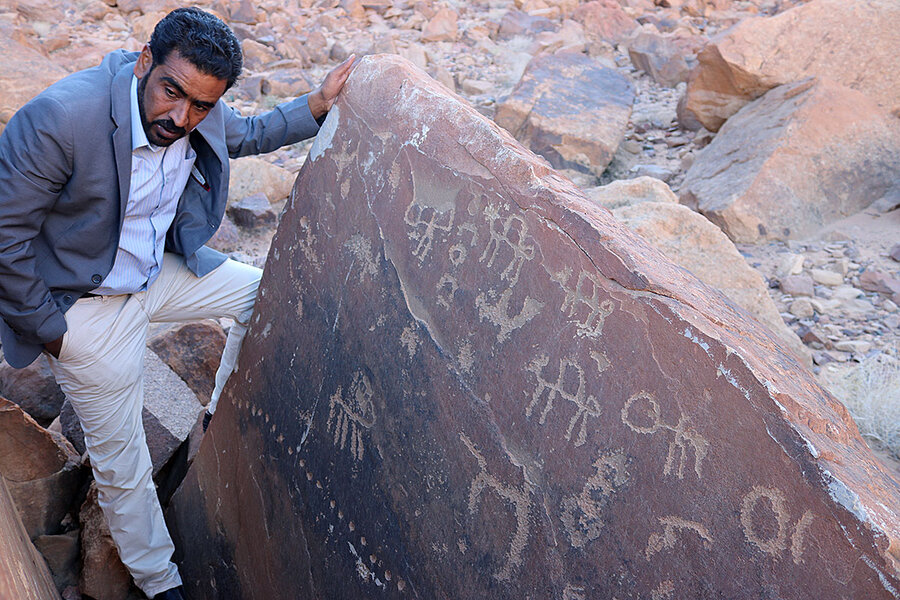
Desert Archive of Ancient Writing
During fieldwork carried out in 2013, researchers documented dozens of stones bearing inscriptions written in the ancient Safaitic script alongside Arabic inscriptions from the early Islamic period.
The study focused on 25 carved stones containing 48 Safaitic inscriptions, many of which included personal names linked to the wider Safaitic corpus. According to epigrapher Hani Hayajneh, the inscriptions add valuable context to the growing body of Safaitic texts discovered across the deserts of Jordan and the wider Arabian Peninsula.
While the vocabulary used in the inscriptions is largely consistent with previously known Safaitic texts, some personal names appear here for the first time, offering new clues about the people who once roamed these deserts.
Rock Art That Tells a Story
Alongside the inscriptions, researchers documented striking examples of anthropomorphic and animal rock art etched into desert stones.
One particularly intriguing drawing shows a woman with flowing, wavy hair, her arms raised upward while holding an unidentified object—possibly a stringed musical instrument. Nearby stands a simple stick-figure that may represent a man. The relationship between the two figures remains unclear, leaving room for interpretation by historians and archaeologists.
Another dynamic scene depicts a mounted confrontation between two riders: a horseman wielding a lance in one hand and a lead rope in the other appears to be facing a camel rider. The camel rider may even be wearing a helmet, suggested by the rounded shape of the figure’s head.
Animal imagery is also common in the carvings. One drawing shows a she-camel with a distinctive curled tail, while the rider sits directly on the hump carrying what appears to be a weapon kit—possibly a sword sheath or a quiver for arrows.
A Hidden Heritage in Jordan’s Desert
These discoveries highlight the northeastern desert of Jordan as more than just a stark and beautiful landscape—it is also an open-air archive of ancient human expression. The Safaitic inscriptions, carved by nomadic tribes more than 2,000 years ago, capture moments of daily life, identity, and storytelling in one of the harshest environments on earth.
For travelers exploring Jordan’s desert regions—whether visiting the dramatic dunes of Wadi Rum or the basalt plains of the northeast—these inscriptions remind us that the desert has long been a place where people lived, traveled, and left their mark on stone.